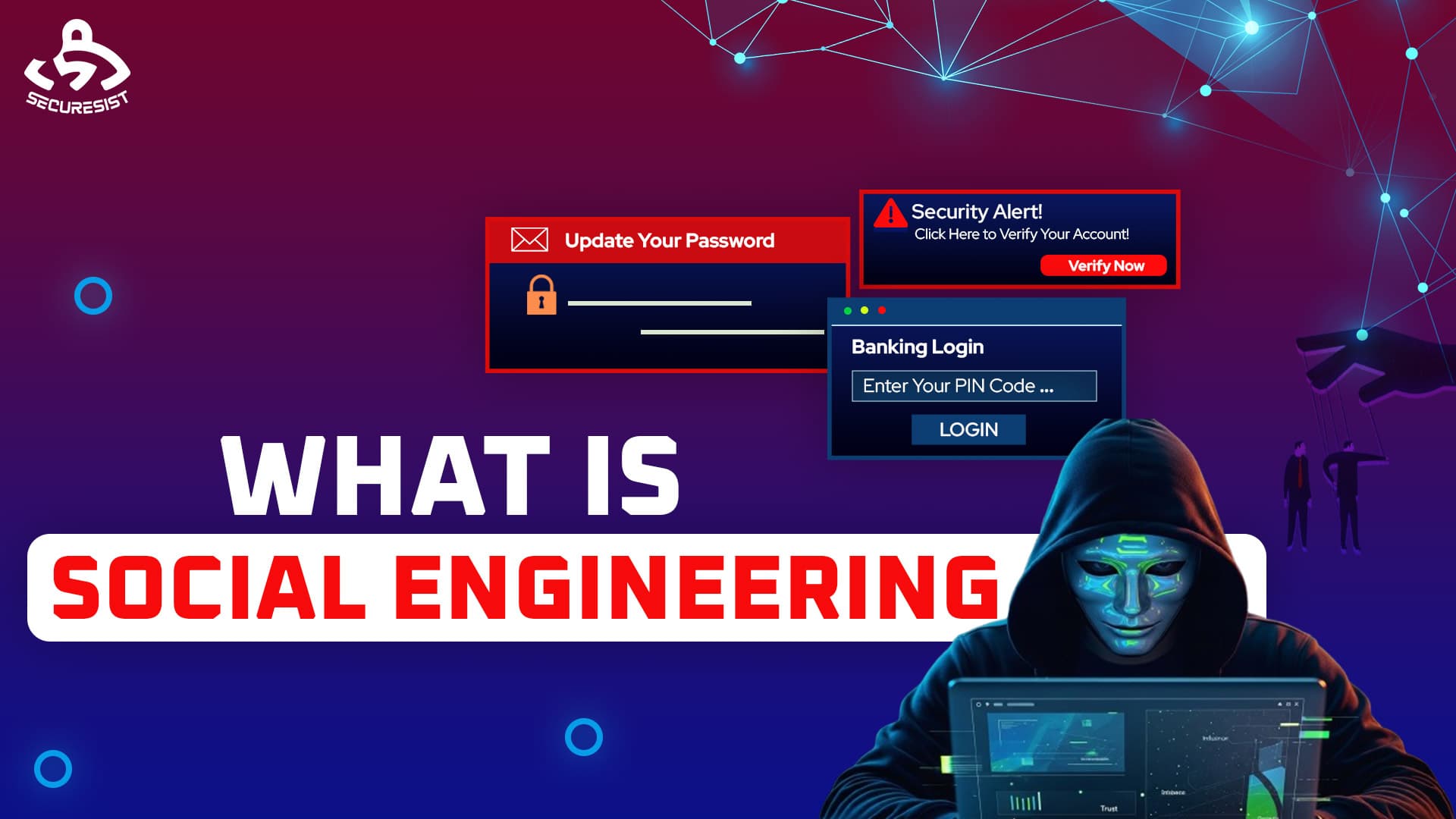
Cybercriminals don’t always attack systems, often, they attack people. Many security breaches begin when employees are tricked into sharing sensitive information or making unsafe decisions. This is why understanding what social engineering is essential for every organization aiming to strengthen its cybersecurity posture.
At SecureSist, we help organizations reduce human cyber risk by building awareness and preparing employees to recognize manipulation tactics before they become security incidents.
What Is Social Engineering?
Social engineering is a cybersecurity attack method that relies on psychological manipulation rather than technical hacking. Instead of exploiting software vulnerabilities, attackers exploit human behavior, such as trust, fear, urgency, or curiosity — to gain unauthorized access to data, accounts, or systems.
In simple terms, if you’re asking what is social engineering, it means tricking people into making security mistakes or revealing confidential information.
How and Why Social Engineering Works
Social engineering works because it targets natural human reactions. Attackers create believable scenarios that encourage quick decisions without verification.
Common reasons it succeeds include:
- Trust in authority or familiar names
- Urgency that pressures quick action
- Fear of negative consequences
- Curiosity or incentives that attract attention
By manipulating emotions, attackers bypass technical security controls and gain access through legitimate users.
Read More : What is ransomware
Types of Social Engineering Attacks
Understanding the common forms of social engineering helps employees recognize risks early.
1. Phishing
Fraudulent emails or messages designed to steal credentials or deliver malware.
2. Spear Phishing
Highly targeted phishing attacks aimed at specific individuals or organizations.
3. Pretexting
Attackers create a fake identity or scenario to gain trust and gather information.
4. Baiting
Using attractive offers or infected files to lure victims into downloading malware.
5. Vishing and Smishing
Voice calls (vishing) or SMS messages (smishing) used to trick users into sharing sensitive data.

How to Spot Social Engineering Attacks
Warning signs often include:
- Urgent requests demanding immediate action
- Unexpected messages asking for passwords or sensitive data
- Suspicious links or attachments
- Requests that bypass normal processes
- Messages pretending to come from executives, IT teams, or trusted brands
Encouraging employees to pause and verify requests is critical to reducing risk.
How to Prevent Social Engineering Attacks
Preventing social engineering requires a balance of technology, process, and awareness.
Best practices include:
- Continuous security awareness training
- Simulated phishing exercises
- Multi-factor authentication (MFA)
- Clear internal verification processes
- A positive reporting culture for suspicious activity
At SecureSist, we focus on behavior-driven awareness training that helps employees recognize real-world attack scenarios and respond safely.
Start reducing social engineering risks today
FAQs
What is the difference between phishing and social engineering?
Phishing is a specific type of social engineering attack that uses emails or messages to deceive users. Social engineering is the broader concept that includes phishing, pretexting, baiting, and other manipulation techniques.
What do you mean by social engineering?
Social engineering means manipulating people into revealing confidential information or performing actions that compromise security, instead of directly attacking technical systems.
Understanding what is social engineering is the first step toward building stronger human-centered security. As attackers increasingly target employees rather than technology, awareness and training become essential defenses.
With SecureSist, organizations can turn employees into confident, security-aware decision-makers, reducing human risk and strengthening overall cybersecurity resilience.